
Denmark sees most expensive week for energy prices for almost four years
Low wind and solar power production last week pushed energy prices up to their highest levels since December 2022, according to energy company Norlys, although prices are still far from those reported at the height of the energy crisis.
In western Denmark, the so-called "pure" energy price – which doesn't include fees or other additional costs – was 1.8 kroner per kilowatt hour, with the price slightly higher at 2 kroner per kilowatt hour in eastern Denmark. That's the highest level since week 51 in 2022, at the end of December, where the pure energy price was 2.9 kroner in both energy zones.
According to Norlys, prices were high due to the weather phenomenon 'Dunkelflaute', a word originally from German which refers to days with little or no wind, where cloud cover or fog also makes it harder to produce solar energy.
The situation is even worse when large parts of Europe are affected by Dunkelflaute, as this means that Denmark cannot import cheap renewable energy from neighbouring countries.
As a result of this, energy companies turn to more expensive options like oil and gas, which have gone up in price as a result of Russia's full-scale invasion of Ukraine and the US' war against Iran.
Danish vocabulary: vindstille – windless/calm
Confederation of Danish Industry criticise Copenhagen's ban on fossil fuel ads
A decision by the Copenhagen city council to ban adverts for products using fossil fuels, for example cruises, flights, and petrol or hybrid cars, has been criticised by the Confederation of Danish Industry as "pure symbolic politics", roughly equivalent to the English term 'tokenism', public broadcaster DR reports.
The idea behind the ban, which means adverts for these products would no longer be permitted in areas owned or rented by the council, such as the metro and on buses, is that it will reduce CO2 emissions and air pollution.
According to Peter Lanng Nielsen, chair of the board of the Copenhagen branch of the Confederation of Danish Industry, the ban is not fair, since the products in question are legal and legitimate.
"When the state has decided that it is legitimate and legal to advertise flights, among other things, it is problematic that a municipality legislates differently," he told DR.
Lanng Nielsen said that the organisation would prefer for politicians to support the green transition instead of making "symbolic" policies.
"We're worried what the next thing will be. Will there suddenly be a ban on advertising clothes, electronics or food?"
The Alternative and Green Left, two of the parties behind the ban, rejected the suggestion that it is a symbolic gesture.
Danish vocabulary: symbolpolitik – symbolic politics or tokenism
Police operation at shopping centre was false alarm
A large number of police were called to the Field's shopping centre in Ørestad on Sunday amid reports of suspicious individuals in military outfits carrying pistols, DR reports.
Luckily, it turned out to be a false alarm, with the individuals in question dressed up for Comic Con Denmark, held in the nearby Bella Center this weekend.
Thousands of people attended Comic Con over the weekend, many of whom were dressed up as characters from their favourite TV shows, films, games or other media.
Danish vocabulary: udklædt – dressed up
Parking companies no longer allowed to issue 'invisible' tickets
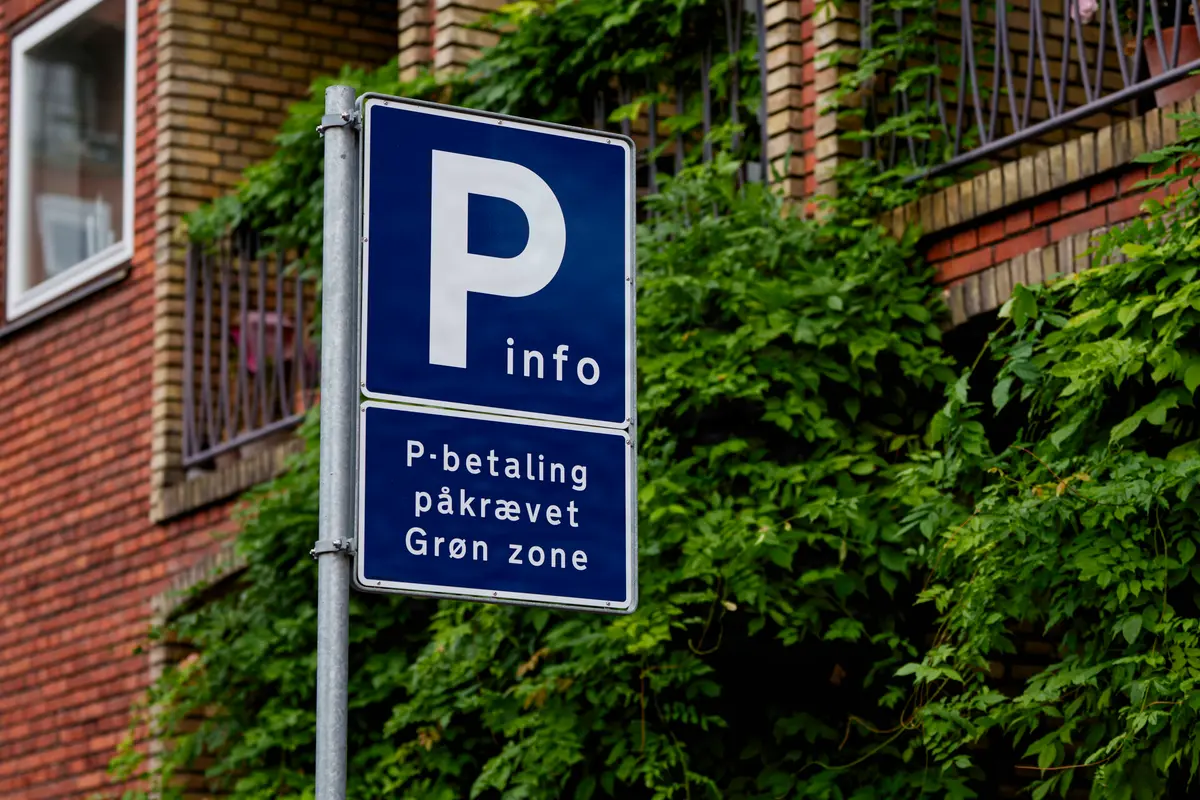
Have you ever received a digital parking ticket, with no yellow ticket placed on your car? These tickets, referred to as "invisible", are not technically legal, and according to Denmark's Motor Vehicle Agency, Tax Minister Jakob Engel-Schmidt and Transport Minister Karina Lorentzen Dehnhardt, parking companies are not allowed to issue them – not even if they call them an "invoice" or "parking fee" instead.
The law actually changed back in July, but a number of parking companies have continued to issue digital parking tickets instead of physical ones, using information in Denmark's vehicle registry to do so. Now, the Motor Vehicle Agency has once again reminded parking companies that they are not allowed to use the vehicle registry to issue tickets until a physical ticket has been placed on the car or handed to the driver.
This is, among other things, to ensure that drivers understand why they have been issued with a ticket.
"We've seen far too many cases where people have been issued with bills or fees for parking which they don't recognise. This is improper and I am very happy that we have once again confirmed the fact that parking companies are not allowed to use the motor vehicle registry to send all kinds of bills to people. It's completely fair to have parking checks, but they need to be reasonable, and if parking companies can't do it properly then they should definitely not be using a public register," Lorentzen Dehnhardt said.
Danish vocabulary: en uskik – improper, a bad habit, misconduct
Comments